During Roland-Garros, Paris tightens.
In the west of the city, traffic compresses around Porte d’Auteuil. Hotel lobbies fill earlier than usual. Lunches stretch because matches do. Conversations begin to orbit around court schedules, weather forecasts, and whether a session might drift into the evening.
Inside the stadium, the atmosphere is unlike any other Grand Slam. The sound of the ball carries. Applause comes in waves, then stops abruptly. Silence settles before a decisive point thick enough to feel physical.
Roland-Garros does not reward excess. It rewards attention.
For corporate hosts, this creates a rare condition: a shared environment where focus is not optional, and where time slows just enough for people to be fully present together. This is the essence of a VIP clients gathering in France: shared presence, not just shared space.
Roland-Garros is also a place of quiet reunions.
Many guests return year after year, and the atmosphere carries a sense of familiarity a shared culture that favors recognition over display.
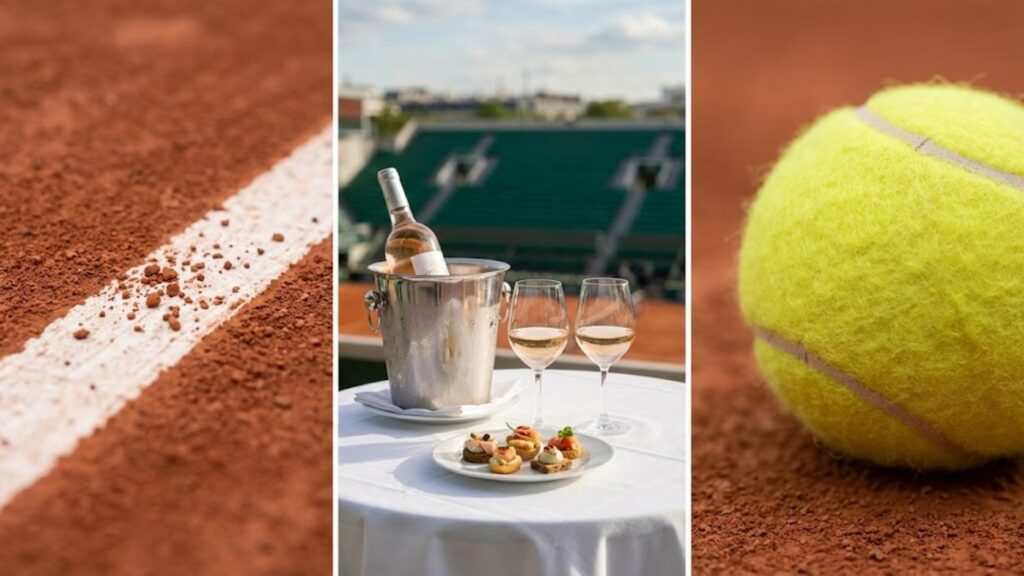
Roland-Garros 2026 : Executive Snapshot
Roland-Garros takes place over two weeks in late May and early June, with the tournament traditionally running from 25 May to 7 June 2026, culminating in the women’s and men’s finals on the closing weekend.
The tournament unfolds in phases:
- Early rounds (Week 1): greater flexibility, more movement, and easier circulation
- Middle rounds: rising tension, longer sessions, tightening schedules
- Final days: maximum focus, limited flexibility, and heavy logistical compression
The stadium itself is compact by design. Access routes are fixed. Seating inventory is finite. Match duration is unpredictable, and weather can alter the rhythm of an entire day.
For corporate hosting, this means one thing: the program must be built around what is likely to happen not what is hoped for. That is where expert corporate travel management becomes the difference between a stressful day and a seamless one.
Here is how that reality translates into a corporate experience.
The Tennis Experience : Focus Without Distraction
At Roland-Garros, the experience begins and ends with the match.
The most effective Roland-Garros corporate experiences are anchored around a single, well-chosen session.
Guests arrive early enough to settle before the first ball. Seating is selected for visibility and comfort rather than proximity alone. Movement during play is minimized. Conversations happen between sets, not over points.
As rallies lengthen, the crowd leans forward. During a break point, the stadium stills, applause suspended, attention absolute. What guests share in those moments is not excitement, but concentration.
Between matches, Roland-Garros breathes.
Conversations resume along the shaded walkways, glasses are shared on the terraces, and the intensity on court gives way to a quieter, distinctly Parisian form of sociability.
For executive hosting, success depends on understanding when control is possible, and when the game must be allowed to lead.
Lunches and dinners are timed around match rhythms, not imposed on them. When the day runs long, the program absorbs the shift rather than fighting it.
This format works particularly well for:
- key client hosting
- executive entertainment
- moments where shared concentration matters more than excitement (akin to high-end incentives)
Roland-Garros rewards those who let the game set the pace.
Beyond the Match : Roland-Garros as a Paris Moment
Once the match ends, the city takes over.
Some groups benefit from extending the experience beyond the stadium.
In these programs, the match becomes an anchor, not the entirety of the day. Guests move from the courts into a quieter Paris setting: a private dining room, a discreet hôtel particulier, or other private venues chosen for conversation rather than celebration.
The contrast matters.
After hours of focus, the city provides distance. Discussions deepen. The shared experience of the match becomes a reference point rather than the subject itself.
This format suits:
- long-standing client relationships,
- leadership groups,
- corporate loyalty programs seeking substance over display.
What We Manage, Concretely
Roland-Garros is unforgiving of approximation.
We manage the operational elements that typically destabilize corporate programs:
- arrival timing and routing around Porte d’Auteuil during peak sessions,
- coordination with official hospitality environments and private spaces,
- seating strategy aligned with guest profile and attention span,
- dining selected for pacing, discretion, and recovery after long sessions,
- real-time adaptation when matches run late or weather intervenes.
Our work relies on practical experience of Roland-Garros conditions not assumptions. The goal is simple: guests remain present, relaxed, and focused, even when the day stretches.
A Note for Executive Assistants and Project Leads
Roland-Garros looks straightforward on paper. In practice, it compresses quickly.
Match durations vary. Sessions extend. Traffic tightens with little warning. Programs that rely on rigid sequencing tend to show stress.
Our approach builds in buffers, fallback options, and on-the-ground decision authority, so adjustments happen quietly and without escalation. For executive assistants, this means clarity, predictability, and a single point of coordination throughout the day.
Moving Forward
Roland-Garros works best when it is treated with restraint.
If the objective is client loyalty, executive hosting, or a composed corporate moment around sport, we can outline a structure that fits your group and the tournament’s real conditions.
The right question is not how many matches to attend
but how the experience should feel when guests leave the stadium.
Request a Roland-Garros 2026 Corporate Brief

Key Questions Corporate Hosts Ask About Roland-Garros 2026
Is Roland-Garros suitable for high-level corporate hosting, or is it too unpredictable?
It is unpredictable by nature, and that is precisely why structure matters. Roland-Garros works exceptionally well for corporate hosting when programs are built around likely scenarios rather than fixed assumptions. When timing, buffers, and fallback options are integrated from the start, unpredictability becomes manageable rather than disruptive.
Which part of the tournament is best for executive or client hosting?
Early rounds offer more flexibility and easier circulation. Middle rounds provide rising tension and stronger engagement. Final days deliver maximum focus but require the highest level of logistical control. The right choice depends on whether your priority is comfort, intensity, or symbolic impact.
Is a full day at the stadium necessary for a successful program?
No. In many cases, a single well-chosen session is more effective than extended exposure. Roland-Garros rewards attention, not accumulation. Programs built around one anchor match often feel more composed and memorable than those trying to fill an entire day.
Can Roland-Garros work for board-level or leadership groups?
Yes, when the match is treated as a shared moment rather than the agenda itself. The concentration required by the game creates a natural pause that often sharpens conversations before or after the session, especially when paired with a quieter Paris setting.
How do you handle matches that run late or weather disruptions?
By planning for them. Match duration variability and weather are structural elements of Roland-Garros. Programs remain stable when buffers, adaptable dining, and on-the-ground decision authority are built in from the outset, allowing adjustments without visible stress for guests.
Is Roland-Garros appropriate for client loyalty rather than pure entertainment?
Very much so. Unlike louder sporting events, Roland-Garros creates a shared experience of focus and restraint. That quality often resonates strongly with long-standing clients and senior stakeholders, making it a powerful loyalty tool when handled with care.